Tipping fees are the single biggest line item most contractors forget to bid. A 200-ton concrete demo job in Florida costs $10,500 in disposal fees alone. That number hits before you load the first truck.
This guide breaks down what tipping fees are, what they cost state by state, and three ways to cut them to zero.
What Is a Tipping Fee?
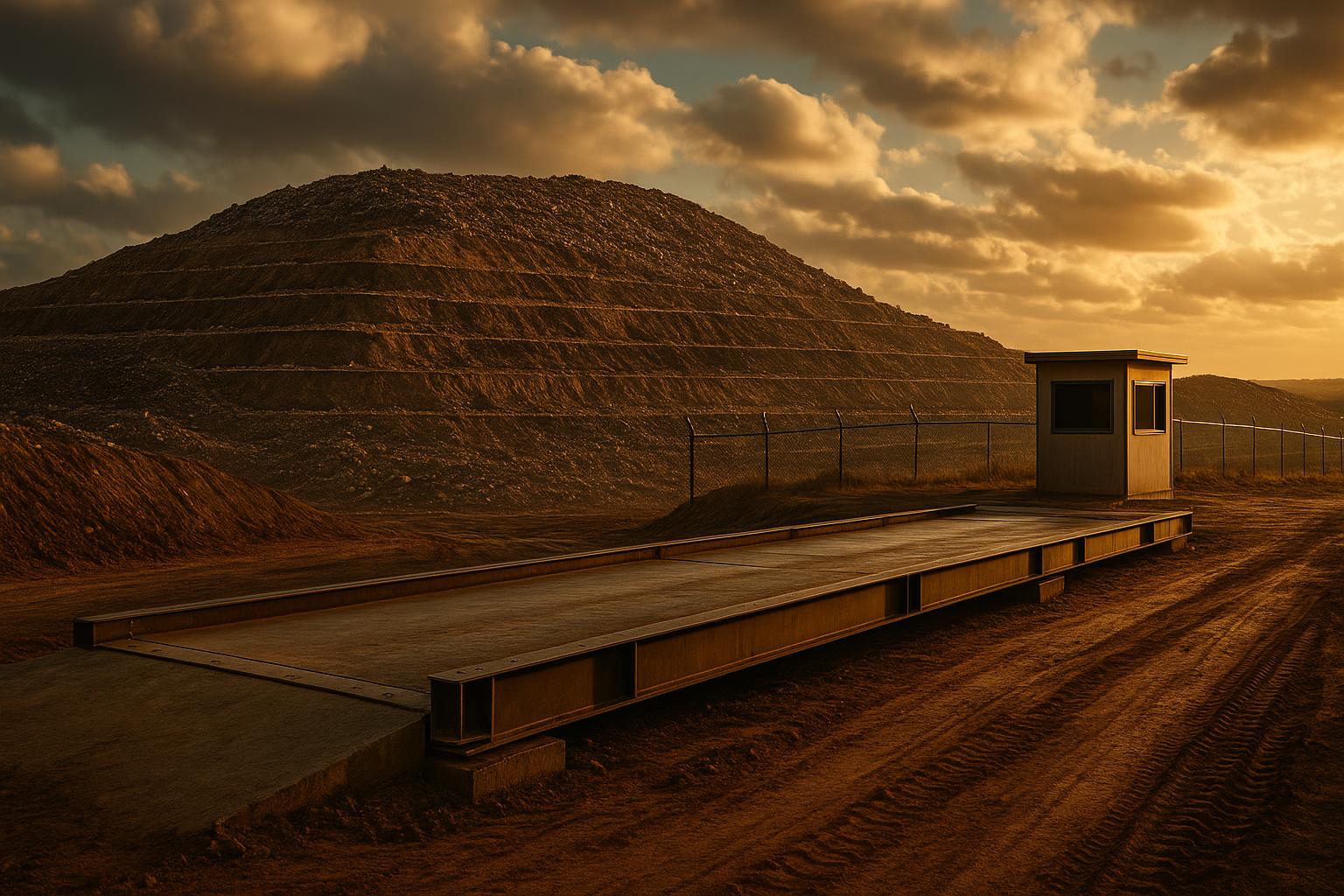
A tipping fee is the per-ton charge a landfill, transfer station, or recycling facility charges to accept your waste. The name comes from the action: you back up to the working face, “tip” your load, and pay at the scale house on the way out.
Most construction and demolition (C&D) facilities charge per ton. The truck rolls across an inbound scale, dumps, then rolls across the outbound scale. The weight difference is your billable tonnage. Some smaller operations charge per cubic yard or flat per-load fees instead, but ton-based pricing is the industry standard at permitted C&D landfills.
The fee varies by material type too. Clean concrete typically gets a lower gate rate than mixed C&D loads. Loads with contaminants (lead paint, asbestos-containing drywall) cost more because they require special handling cells.
Three things drive tipping fee rates:
1. Operating costs. Dozers, compactors, labor, and diesel to spread and compact waste daily. 2. Environmental compliance. Liner systems, leachate collection, groundwater monitoring wells, stormwater ponds, and air quality permits all add cost per ton. 3. Closure and post-closure funds. Federal law requires every landfill to set aside money for final capping, grading, revegetation, and 30 years of post-closure groundwater monitoring.
These costs get passed directly to you at the scale house. And they rise every year. Tipping fees have increased faster than inflation in recent years. The national average rose 10% in a single year between 2023 and 2024, reaching $62.28 per ton for municipal solid waste. The EPA estimates over 600 million tons of C&D debris are generated in the US each year, and disposal costs climb as landfill capacity tightens.
How Much Are Tipping Fees? State-by-State Rates
Tipping fees vary by state, county, facility, and material type. C&D waste (concrete, asphalt, wood, drywall) usually costs less than municipal solid waste (MSW) because it takes up more space but poses fewer contamination risks.
Here are average C&D tipping fee rates for six Southeast states:
| State | Avg. C&D Tipping Fee | Notes |
|---|---|---|
| Florida | ~$52.50/ton | South Florida counties run $60-$75/ton. Tampa averages $52.50/ton. |
| Georgia | ~$45.00/ton | Metro Atlanta rates trend higher |
| North Carolina | ~$42.00/ton | Piedmont region averages $38-$48/ton |
| Tennessee | ~$40.00/ton | Nashville-area facilities run $45+/ton |
| South Carolina | ~$38.00/ton | Upstate facilities often cheaper than coastal |
| Alabama | ~$35.00/ton | Lowest average rates in the Southeast. Birmingham area runs $30-$38/ton. |
Key variables that shift your actual rate:
- Material type. Clean concrete often gets a lower rate than mixed C&D. Vegetative waste sometimes has a separate, cheaper fee. Contaminated material (painted wood, drywall with lead paint) costs significantly more.
- Volume commitments. Some facilities offer discounted rates for contractors who bring consistent volume.
- Distance from metro areas. Rural landfills with open capacity tend to charge less than urban transfer stations.
MSW tipping fees run 20-40% higher than C&D rates at most facilities. Vegetative waste (stumps, brush, logs) often gets a separate, lower rate at facilities that grind and mulch it.
One more thing to watch: surcharges. Many landfills add fuel surcharges, environmental fees, or gate fees on top of the published per-ton rate. Always ask for the “all-in” gate rate before you bid a job. A $45/ton posted rate can turn into $52/ton after surcharges.
The Real Cost of Tipping Fees on a Demo Job
Tipping fees are only part of the disposal bill. Every ton you haul off-site also costs you trucking, driver time, and lost production on the demo site. Here is a real example.
Job: 200-ton concrete slab demo in Central Florida.
| Cost Category | Calculation | Total |
|---|---|---|
| Tipping fees | 200 tons x $52.50/ton | $10,500 |
| Trucking | 10 loads x $135/load | $1,350 |
| Driver time | 10 loads x 2 hrs x $35/hr | $700 |
| Total haul-out cost | $12,550 |
That $12,550 is pure disposal cost. No demo labor. No excavator rental. No site prep. No profit margin. For a deeper look at concrete disposal economics specifically, see our concrete disposal cost breakdown.
On most demo jobs, haul-out and disposal eat 15-25% of the total project budget. On smaller slabs and foundations, the percentage climbs even higher because the fixed costs (mobilization, permits, traffic control) stay the same regardless of tonnage.
Now multiply that across a year of jobs. A mid-size demo contractor running 15-20 jobs per year can easily spend $150,000-$250,000 annually on tipping fees and trucking.
Every haul trip also burns production time. Your excavator sits idle while the truck runs to the landfill and back. A two-hour round trip is standard. On a 10-load job, that is 20 hours of gate-to-gate trucking. Your operator waits. Your timeline stretches. Your overhead keeps ticking.
There is also a hidden cost most contractors miss: fuel. A loaded tri-axle burns roughly 4-5 gallons per hour. Ten round trips at two hours each uses 80-100 gallons of diesel. At $4/gallon, that adds $320-$400 to the disposal bill that never shows up on the tipping receipt.
Three Ways to Reduce or Eliminate Tipping Fees
The math changes when you process material on-site instead of hauling it to a landfill. Here are three methods that work.
1. On-Site Crushing
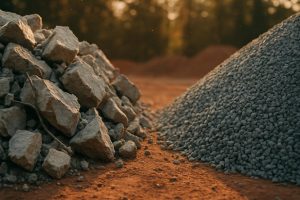
A portable jaw crusher turns reinforced concrete into reusable aggregate right on the demo site. Your excavator feeds broken slab into the hopper. The crusher processes rebar-reinforced concrete and outputs 3/4-inch minus base material. That crushed product works as road base, pipe bedding, backfill, or parking lot sub-base.
The numbers on that 200-ton Florida job:
- Tipping fees eliminated: $10,500
- Trucking eliminated: $1,350
- Driver time eliminated: $700
- Value of crushed base material (200 tons x ~$12/ton): $2,400
- Total swing: $14,950
A compact crusher like the Evortle CT-535 handles jobs in the 50-150 ton range. For larger demo work (parking structures, bridge decks, commercial foundations), the CT-850 processes 65 to 130 tons per hour. For a step-by-step walkthrough of the crushing process, see how on-site concrete crushing works.
See available concrete crushers in the Southeast.
2. On-Site Screening
A trommel screen separates mixed material into clean, reusable fractions. Feed goes into the rotating drum. Clean soil drops through the screen openings. Oversize rock and aggregate discharge off the end. Debris and trash get sorted out separately.
The result: 60-70% of your material stays on-site as usable fill or topsoil. Only the contaminated fraction goes to the landfill. That cuts your tipping fees, trucking, and haul time by roughly the same percentage.
Screening works well on excavation spoils, land-clearing sites with mixed fill, utility trenching backfill, and any job where dirt and debris are mixed together. Instead of paying $45/ton to dump clean soil at a landfill, you screen it and reuse it on the same project.
See available trommel screens in the Southeast.
3. On-Site Burning
An air curtain burner processes vegetative waste on the job site: trees, stumps, brush, root balls, and land-clearing debris. A high-velocity curtain of air feeds the fire pit, holding combustion temperatures above 1,800 degrees F. That high heat reduces wood waste volume by roughly 95%.
Here is what that means in practice. A 500-cubic-yard brush pile from a 10-acre clearing job burns down to a few cubic yards of ash. That is 25 truckloads reduced to one. At $35/ton tipping and $135/load trucking, burning saves $4,000-$6,000 on a single clearing job.
Most Southeast states allow air curtain burners in counties where open pile burning is banned. The controlled combustion produces far less smoke and particulate than open burning, which makes permitting easier.
See available air burners in the Southeast.
When On-Site Processing Beats Hauling
Not every job justifies renting a crusher or a screen. Here is a quick sizing guide.
At a $45/ton tipping fee, the break-even point for a crusher rental is roughly 50 tons. Below that, the rental mobilization cost exceeds what you save on tipping and trucking.
| Job Size | Recommendation |
|---|---|
| Under 20 tons | Haul it. The mobilization cost for on-site equipment exceeds the disposal savings. |
| 20-50 tons | Run the numbers. Compare your local tipping fee + trucking cost against a weekly equipment rental rate. |
| Over 50 tons | On-site processing almost always wins. The savings on tipping, trucking, and driver time outweigh the equipment rental cost. |
Other factors that tip the math toward on-site processing:
- Long haul distances. If the nearest C&D facility is 30+ miles away, trucking costs climb fast. A 60-mile round trip at $4.50/mile loaded adds $270 per trip before you even pay the tipping fee.
- Reuse potential. If the project needs fill, base, or grading material, crushed concrete or screened soil eliminates a separate purchase. You avoid paying for disposal and avoid paying for new aggregate.
- Tight schedules. Hauling 200 tons takes 10 truck loads over two or more days. A crusher processes 200 tons in a single shift. That schedule compression matters on jobs with liquidated damages or tight turnover deadlines.
- Multiple material types. Jobs with both concrete and vegetative waste can pair a crusher with an air burner. The crusher handles the hard material. The burner handles the wood waste. Nothing goes to the landfill.
Stop Paying to Throw Away Reusable Material
Tipping fees drain project budgets on every demo and site-clearing job in the Southeast. Rates average $35-$52 per ton today and keep climbing as landfill capacity tightens. The contractors who keep more profit per job are the ones who process material on-site instead of hauling it to the dump.
GrinderCrusherScreen has connected contractors with portable crushers, trommel screens, and air burners since 1973. Call 770-433-2670 to get matched with a provider in your area, or browse equipment at grindercrusherscreen.com.